

You can now switch from dual-reviewer to single-reviewer in Extraction 1.
Using a single reviewer workflow means that only one reviewer is required to complete data extraction and quality assessment on each study. In addition, you will not need to complete a consensus step.
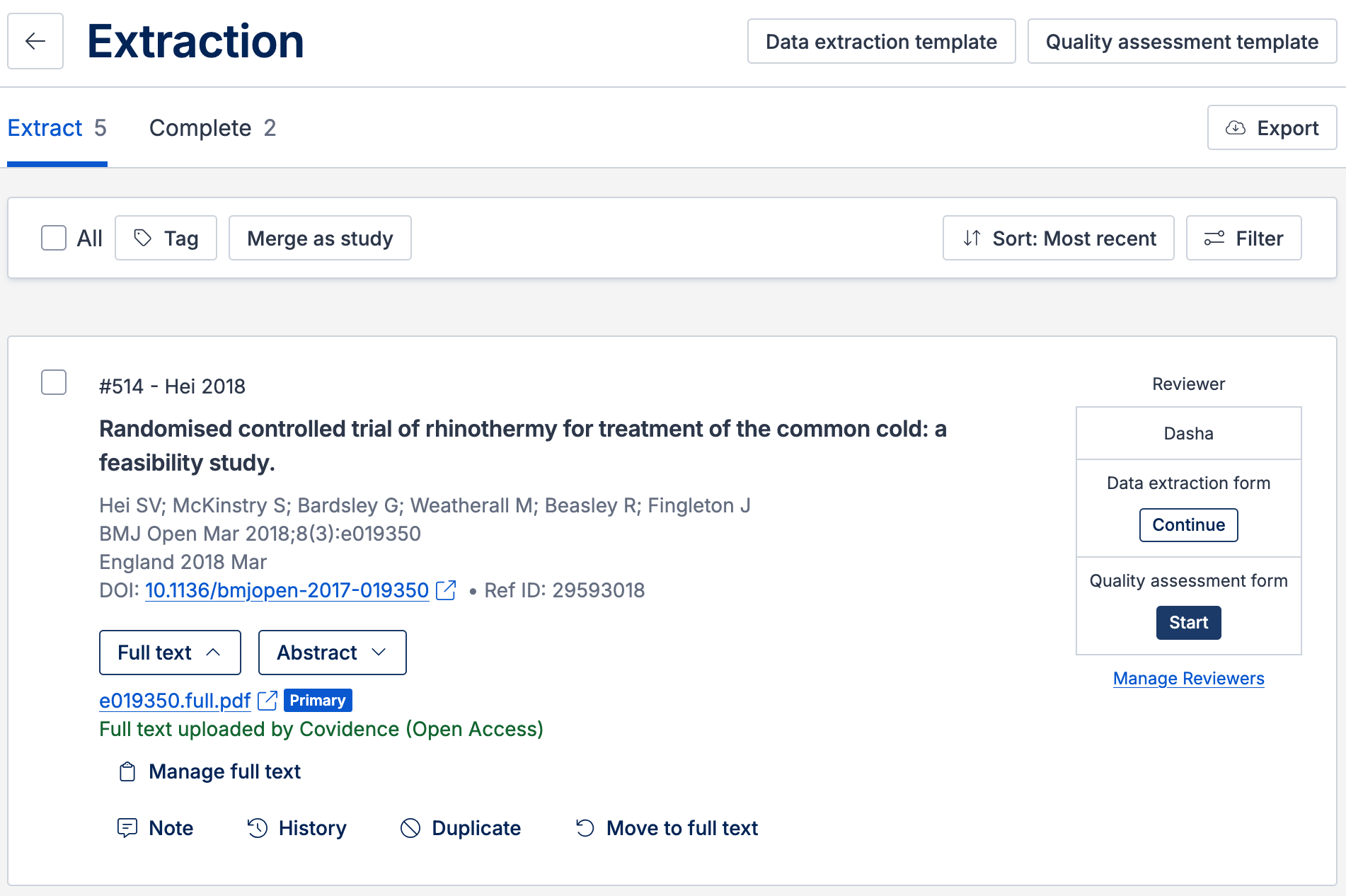
How to switch from dual- to single-reviewer extraction
When you start your review in Covidence, it will be set to dual-reviewer by default.
To switch to single-reviewer, go to Review summary, then Settings. Under Review settings, set Reviewers required for data extraction to 1.
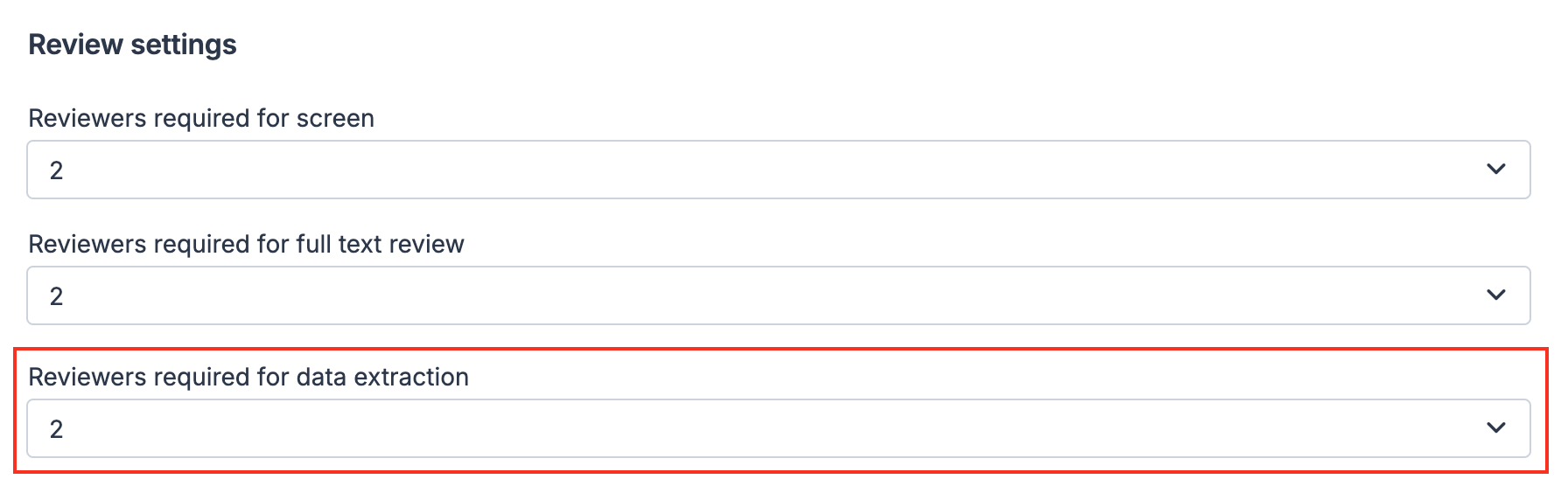
To switch back from single-reviewer extraction to dual-reviewer extraction, set Reviewers required for data extraction to 2.
What if I already started dual-reviewer extraction?
You can only change to single-reviewer extraction if reviewer 2 has not started any studies.
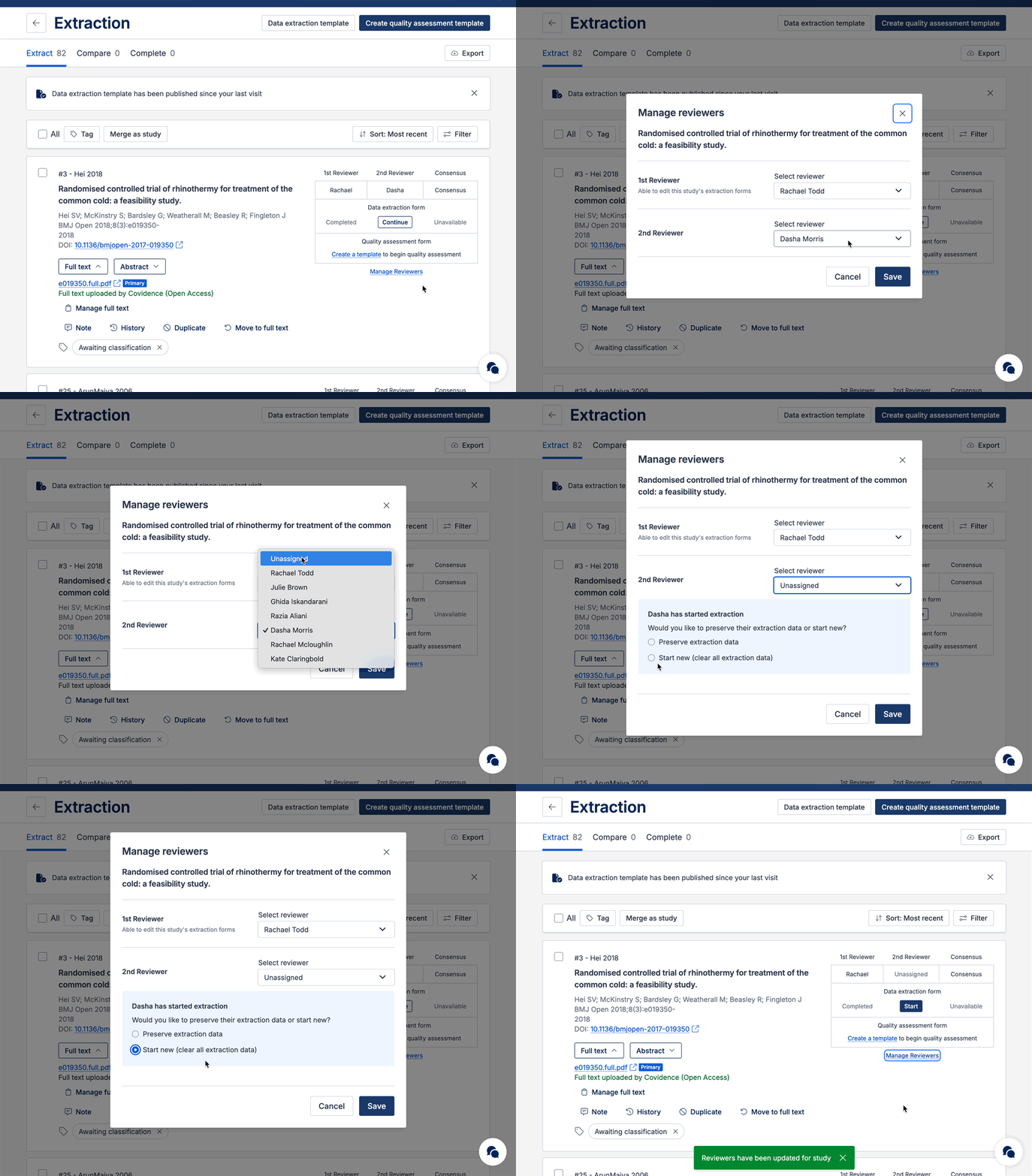
However, you can always delete and reset the form for reviewer 2.
To do this, use the Manage Reviewers link under each study, select Unassigned for the 2nd Reviewer, and then select Start new (clear all extraction data).
If you started extraction on a study and then moved it back to the full-text stage to be excluded, then you need to vote to include that study. Once the study is at the data extraction stage, delete and reset the form for reviewer 2 as described above. Now, the study is ready to be moved back to the full-text stage, where you can re-vote to exclude it.
Export data
You can export your data to CSV or Excel file at any stage:
Go to the Export page, which is accessible from your review's summary page.
Under Extraction, make sure Data extraction is selected.
All extracted data will be auto-selected for single reviewer mode
Choose the format you need:
Sheet per section (Excel) is useful
Single sheet (CSV)
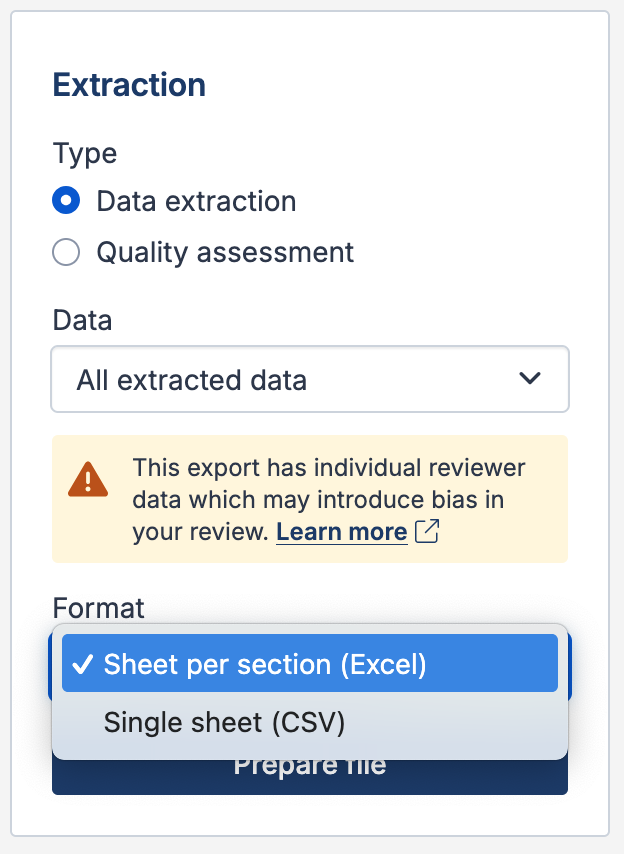
Select Prepare file button.
In the Recent exports list, your file will appear with a Download button once ready.
Click Download and save your file.
Open the file using Excel or your preferred spreadsheet software (e.g. Google Sheets, Numbers etc)
Note: Exports to RevMan are not currently supported when using single-reviewer extraction.