

Extraction 1 is the right choice when you're collecting numerical data against defined groups (e.g., Mean, SD, N, effect sizes across intervention arms, exposure levels, or cases). The structure is built around comparing groups, whether those are treatments, exposures, phenomena, or individual cases.
While the Extraction 1 template has fixed section headers (Identification, Methods, Population, Interventions, Outcomes), you have complete flexibility to customize fields within each section. The "Interventions" section is just a label, it can capture any type of comparison group relevant to your research question.
This guide shows you how to set up the template for different types of reviews that aren't focused on interventions.
Your review focus: | "Interventions" section becomes: |
Therapy/Treatment | Intervention vs. Control |
Harm/Etiology | Exposure levels |
Case Series | Individual cases (Case 1, Case 2...) |
Qualitative | Phenomena of interest |
Diagnostic Accuracy | Index test vs. Reference standard |
Prognosis | Prognostic factor groups |
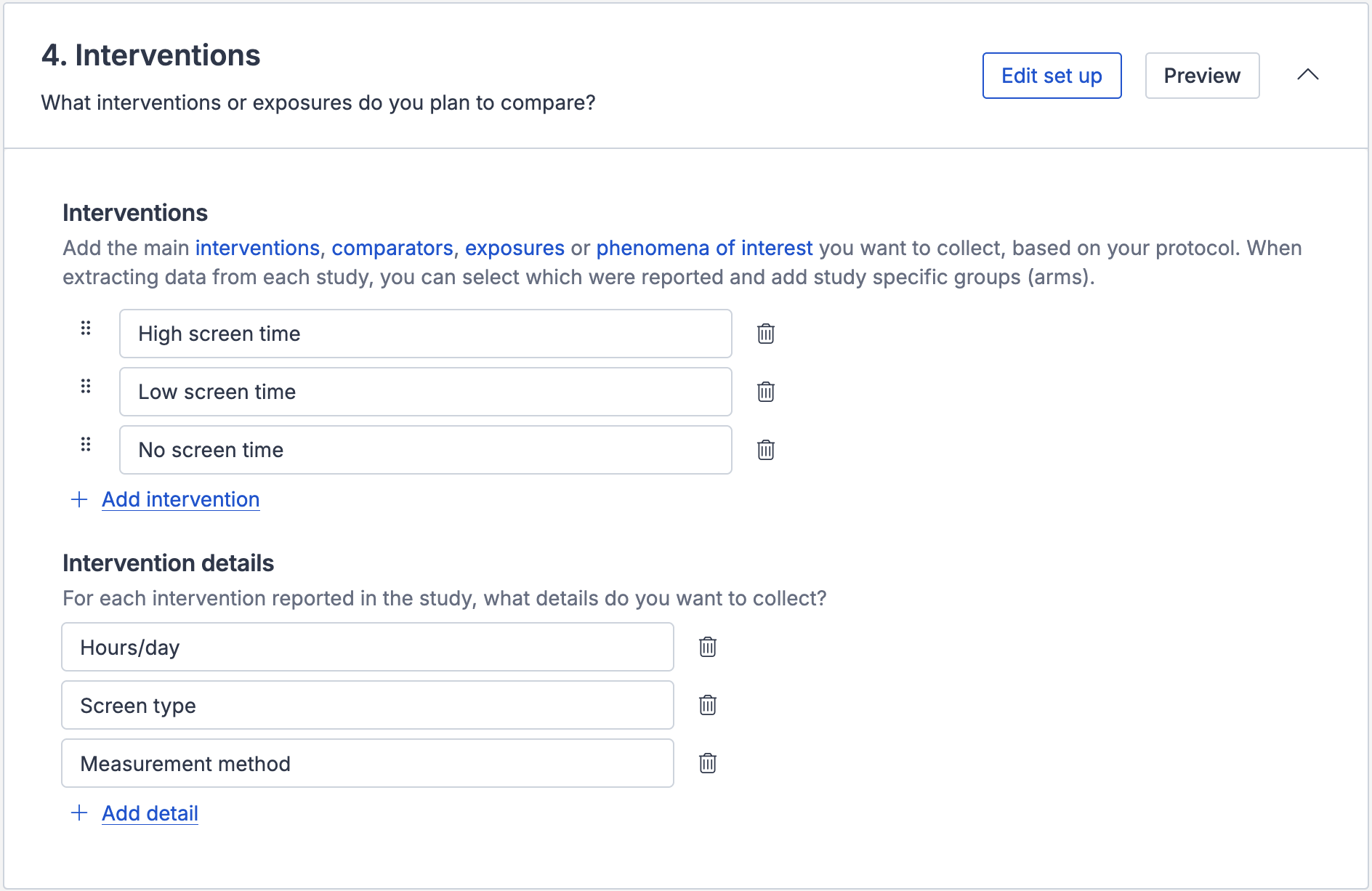
Example 1: Harm / Etiology review
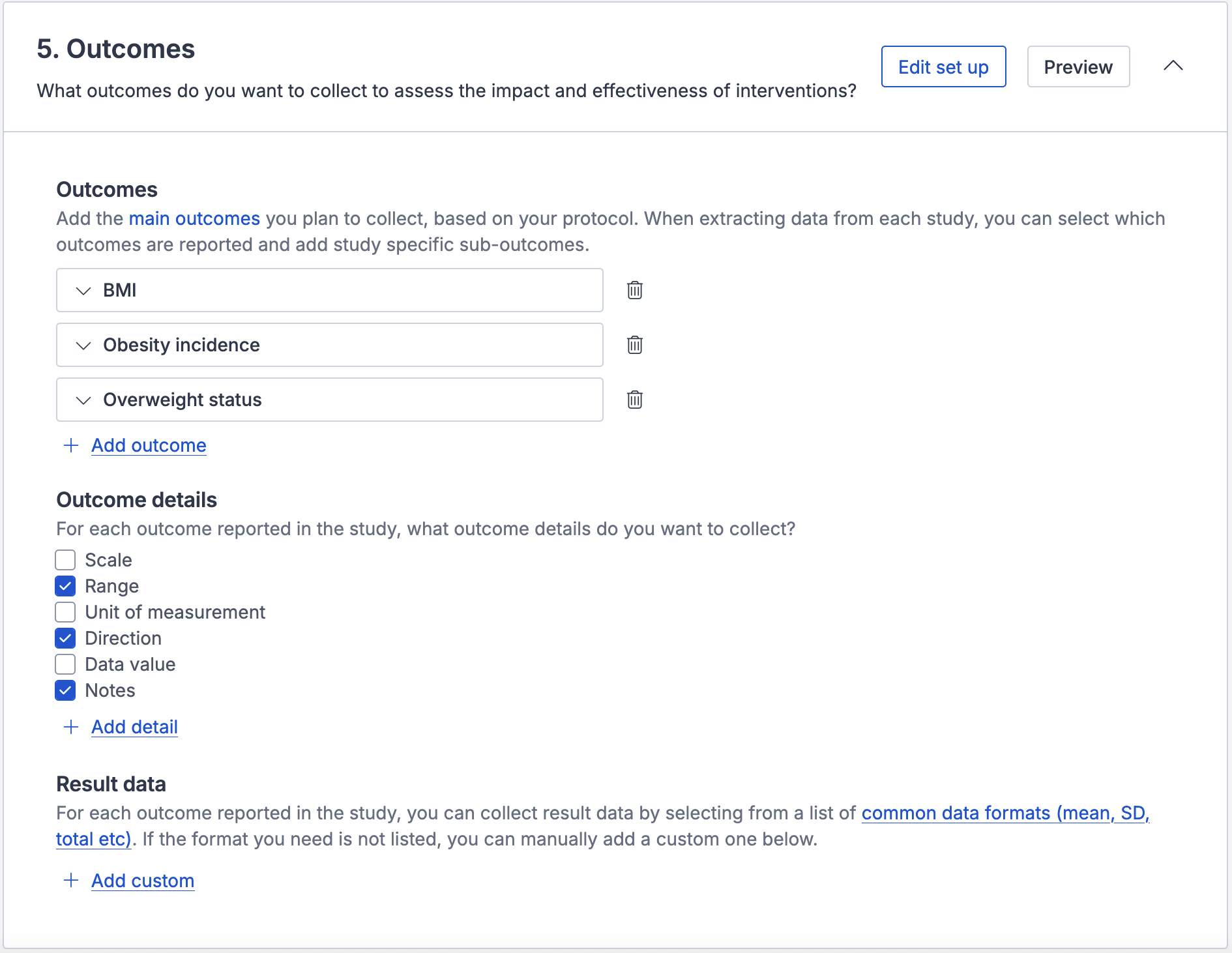
Research question: What is the association between screen time exposure and childhood obesity?
Extraction 1 template | Example fields |
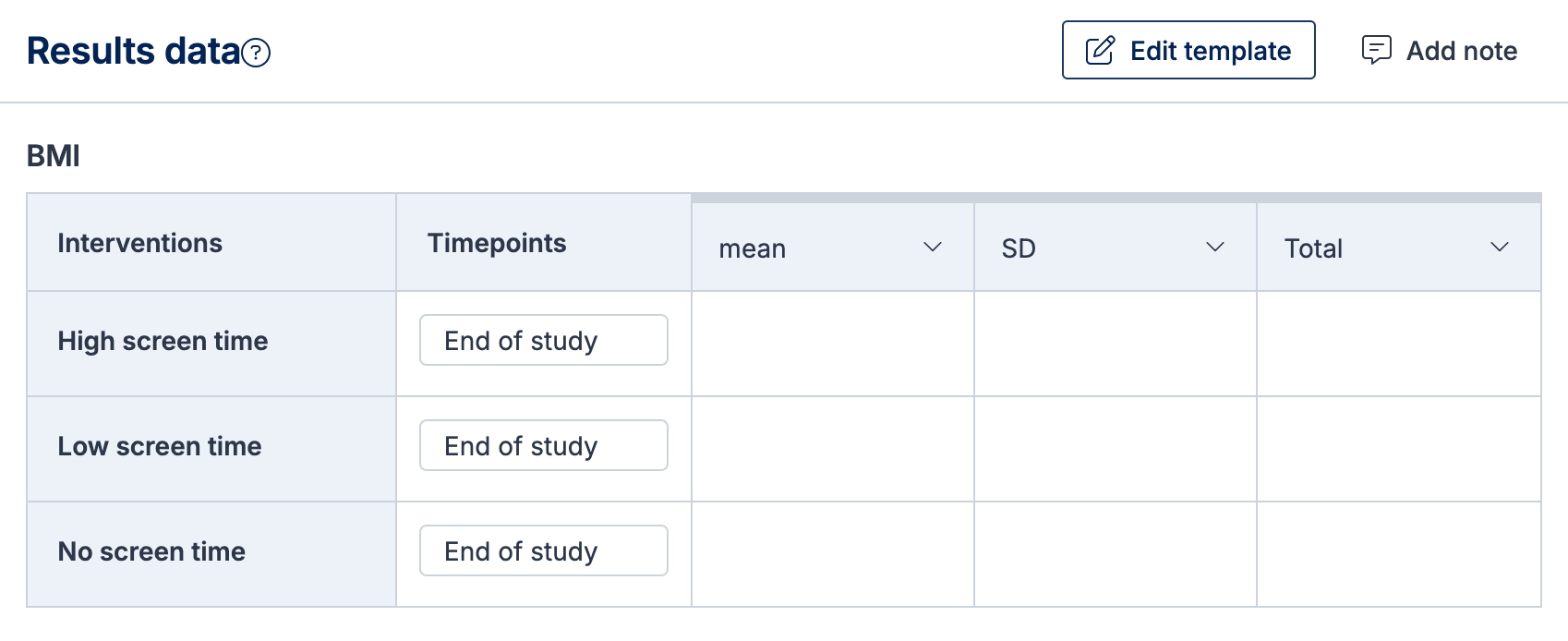
Interventions (as Exposures) | High screen time |
Intervention details (as Exposure details) | Hours/day |
Outcomes | BMI |
How it looks like in the template:
How it data capture of exposures and outcomes like in the data extraction form:
Example 2: Case Series
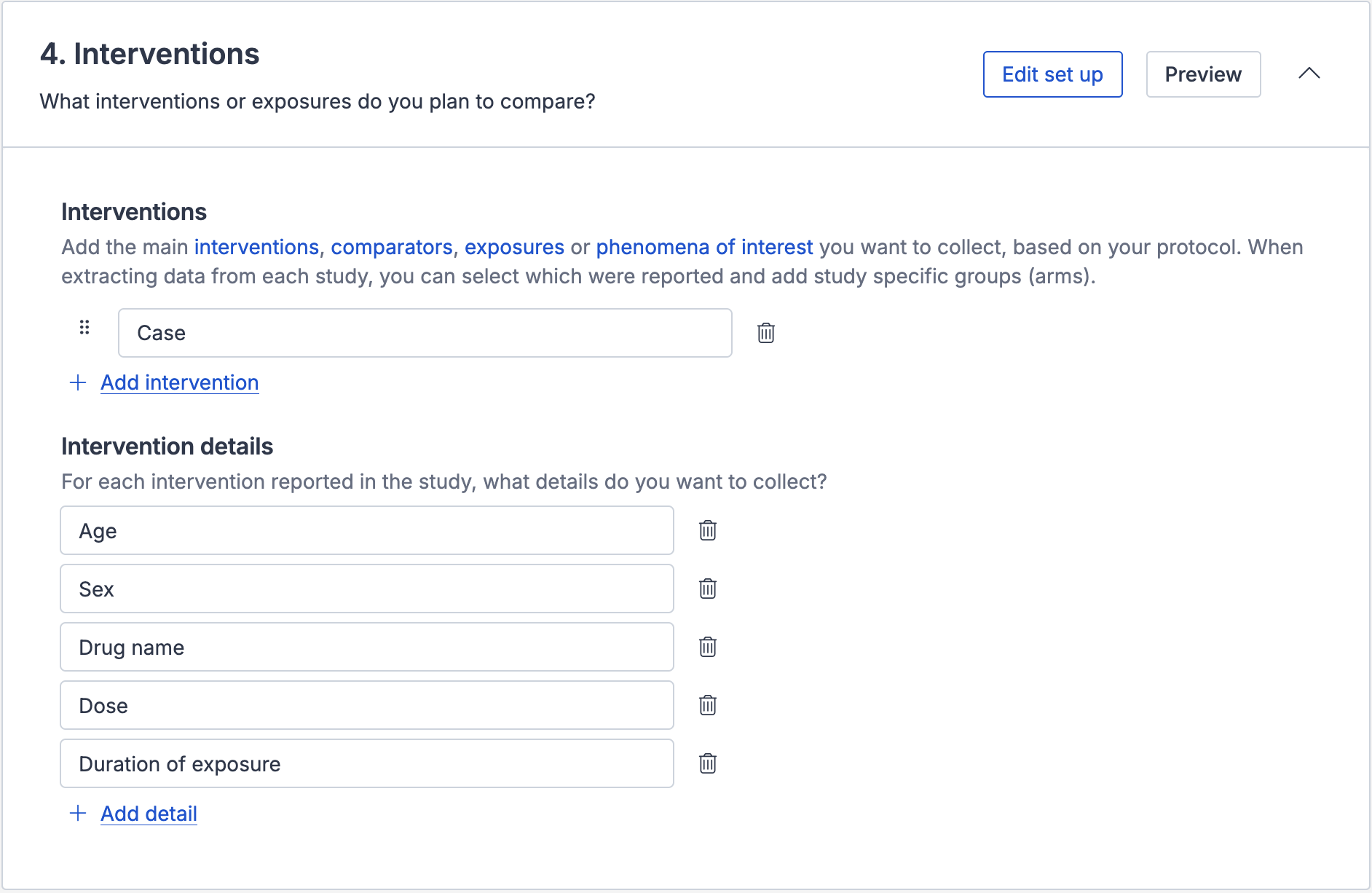
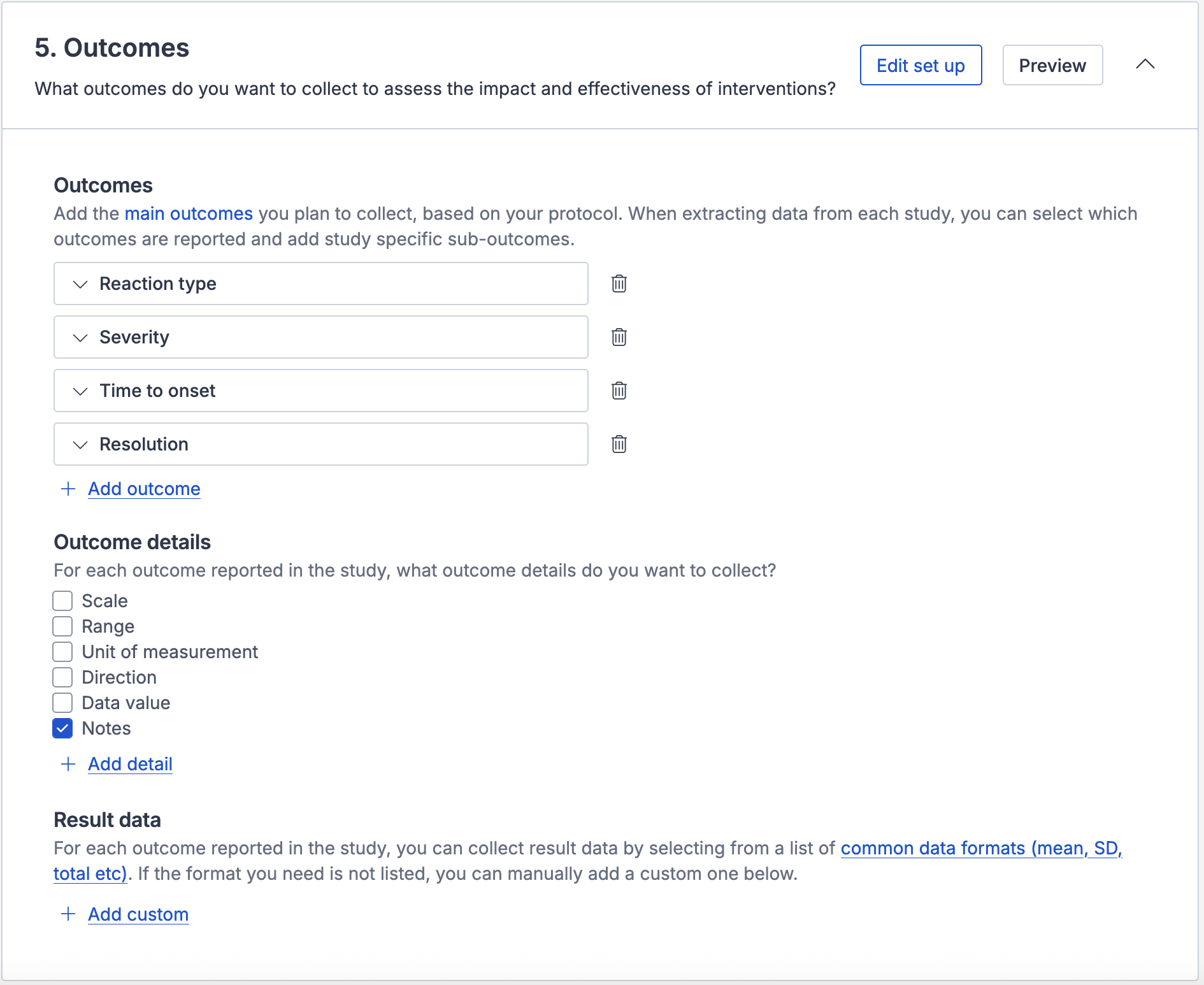
Research question: What are the clinical presentations and outcomes of rare drug reactions?
Extraction 1 template | Example fields |
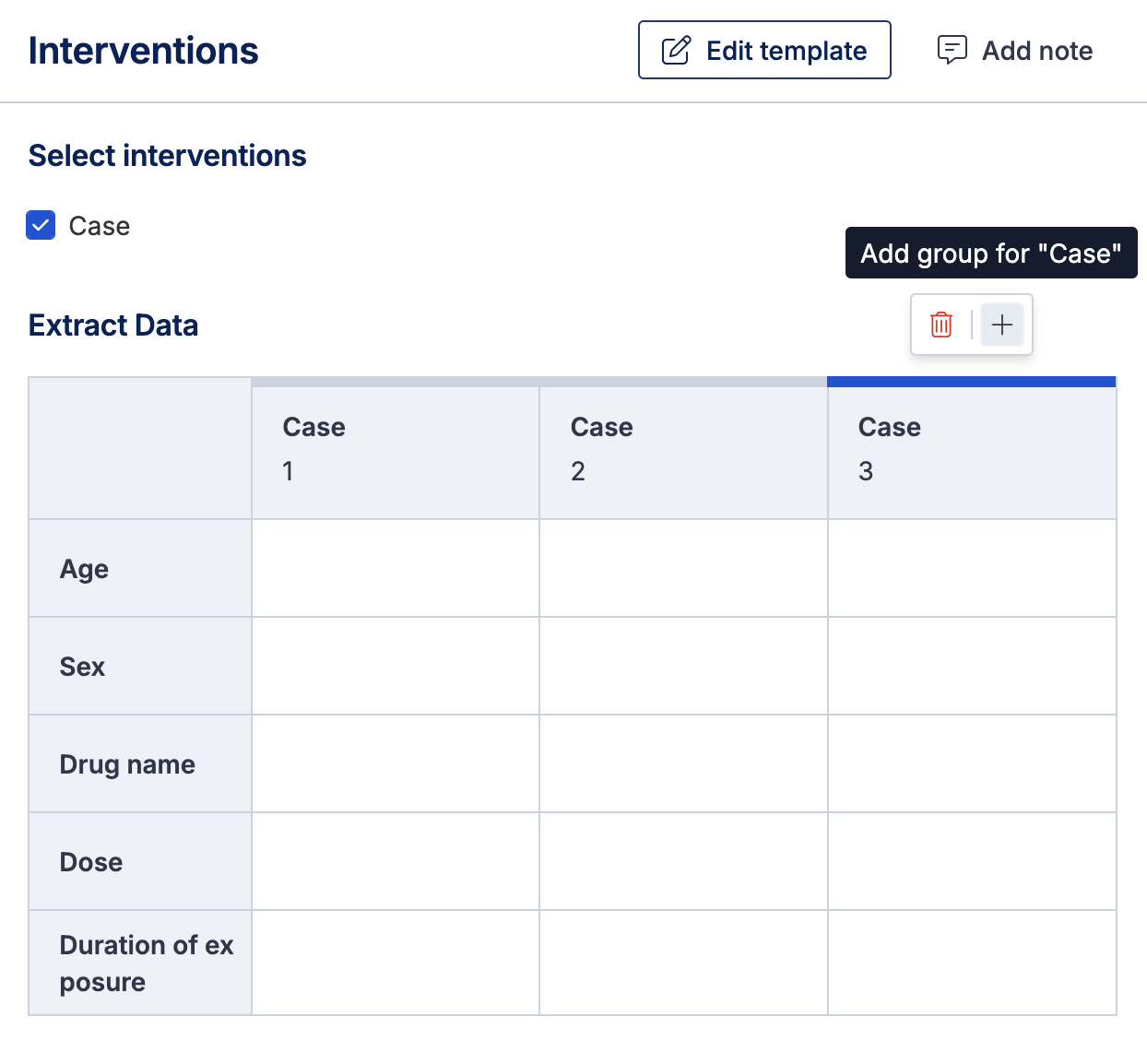
Interventions (as Cases) | Case (Note: During extraction you can add multiple cases using the plus button) |
Intervention details (as Case details) | Age |
Outcomes | Reaction type |
How it looks like in the template:
How it data capture of cases like in the data extraction form:
Example 3: Qualitative Review
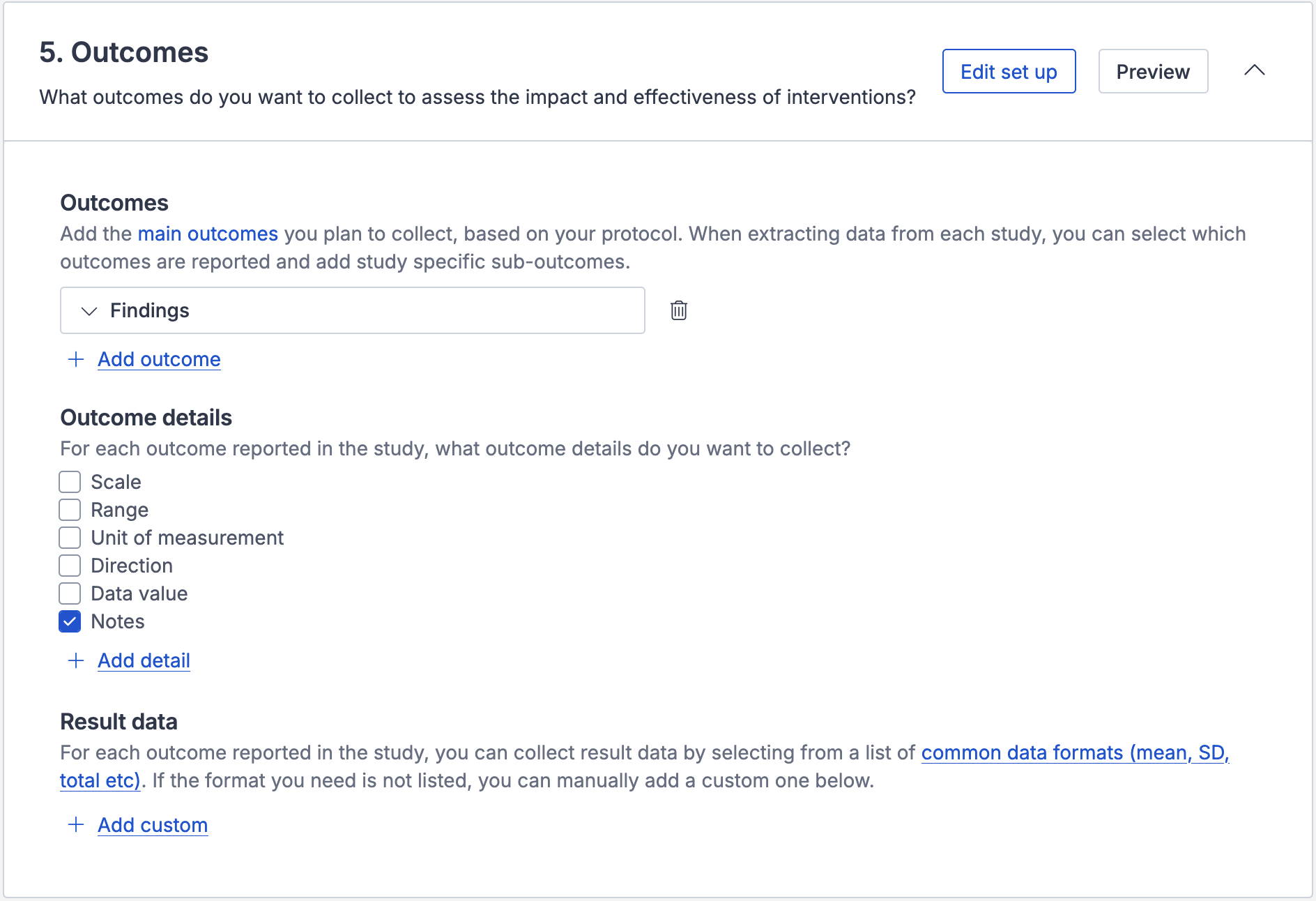
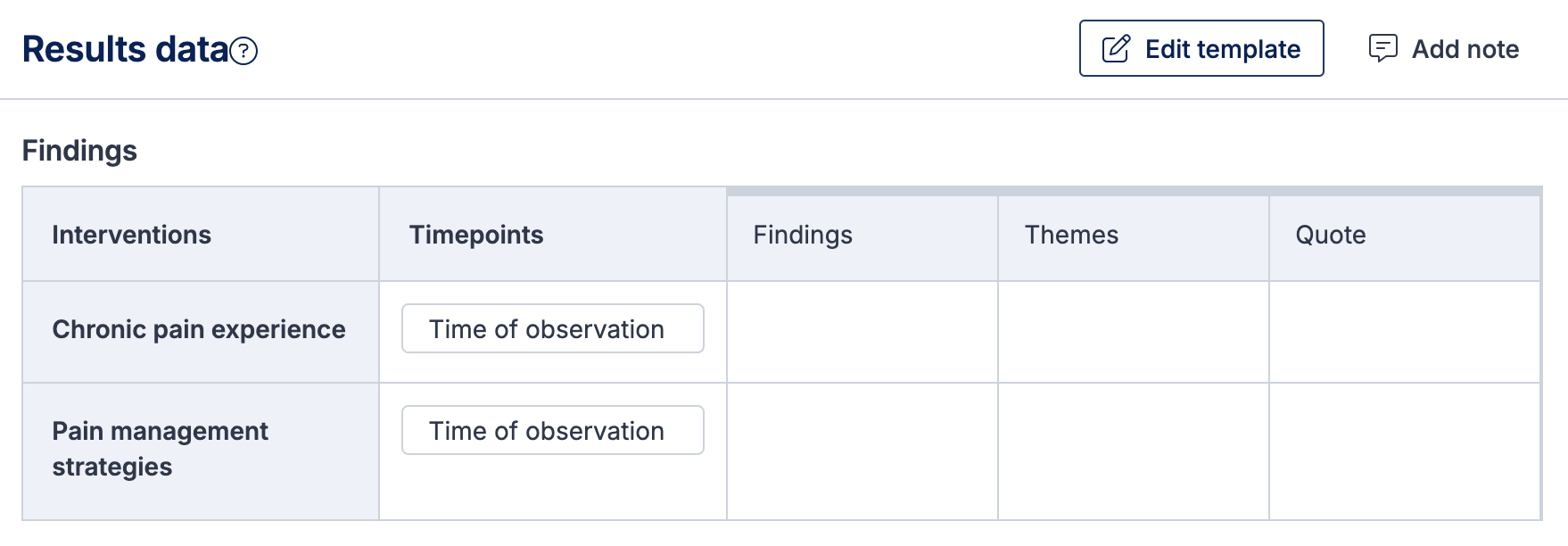
Research question: What are patients' experiences of living with chronic pain?
Extraction 1 template | Example fields |
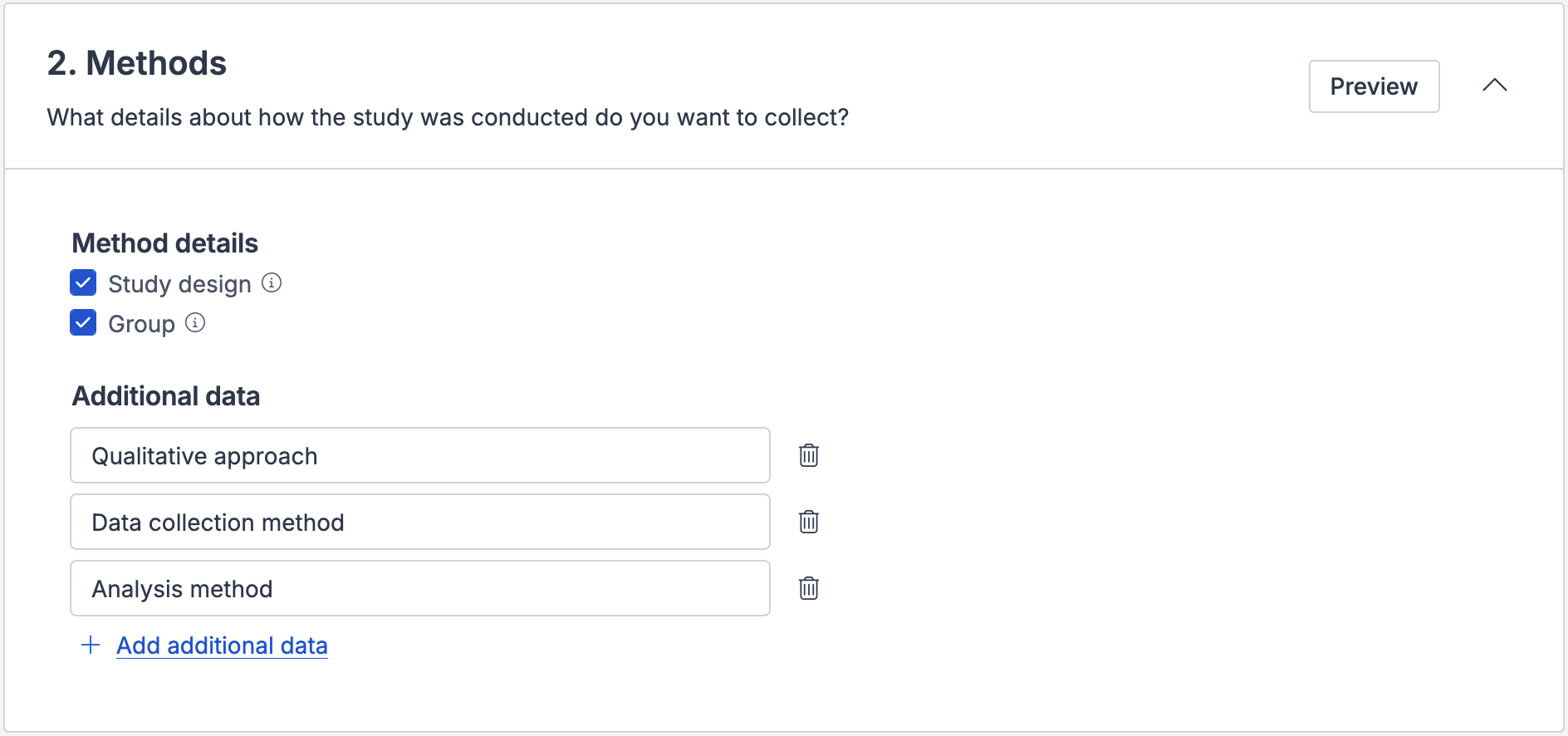
Methods | Qualitative approach |
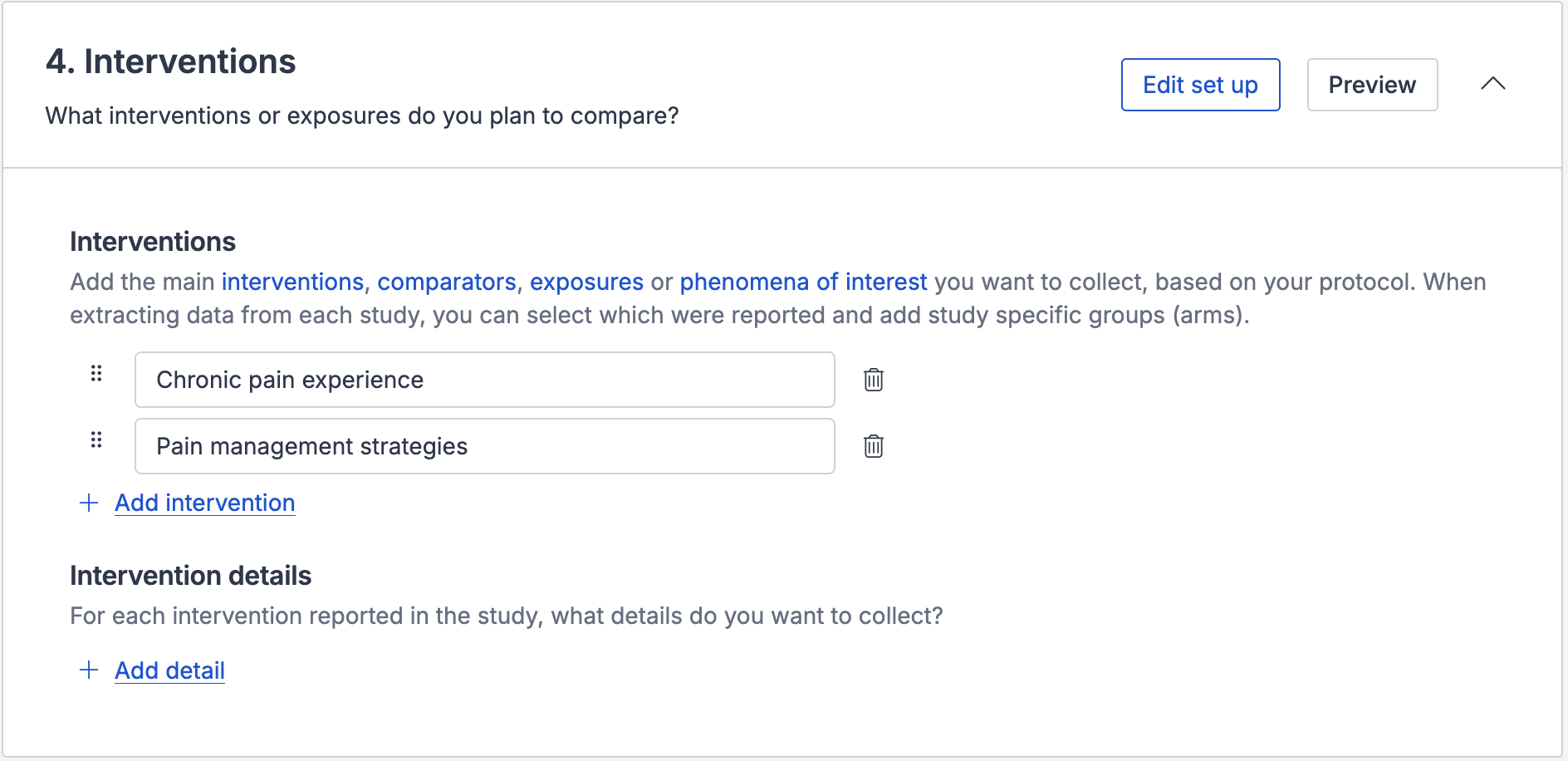
Interventions (as Phenomena of Interest) | Chronic pain experience |
Outcome (as Findings) | Findings |
How it looks like in the template:
How data capture of phenomena of interest and findings looks like in the data extraction form:
Example 4: Diagnostic Test Accuracy
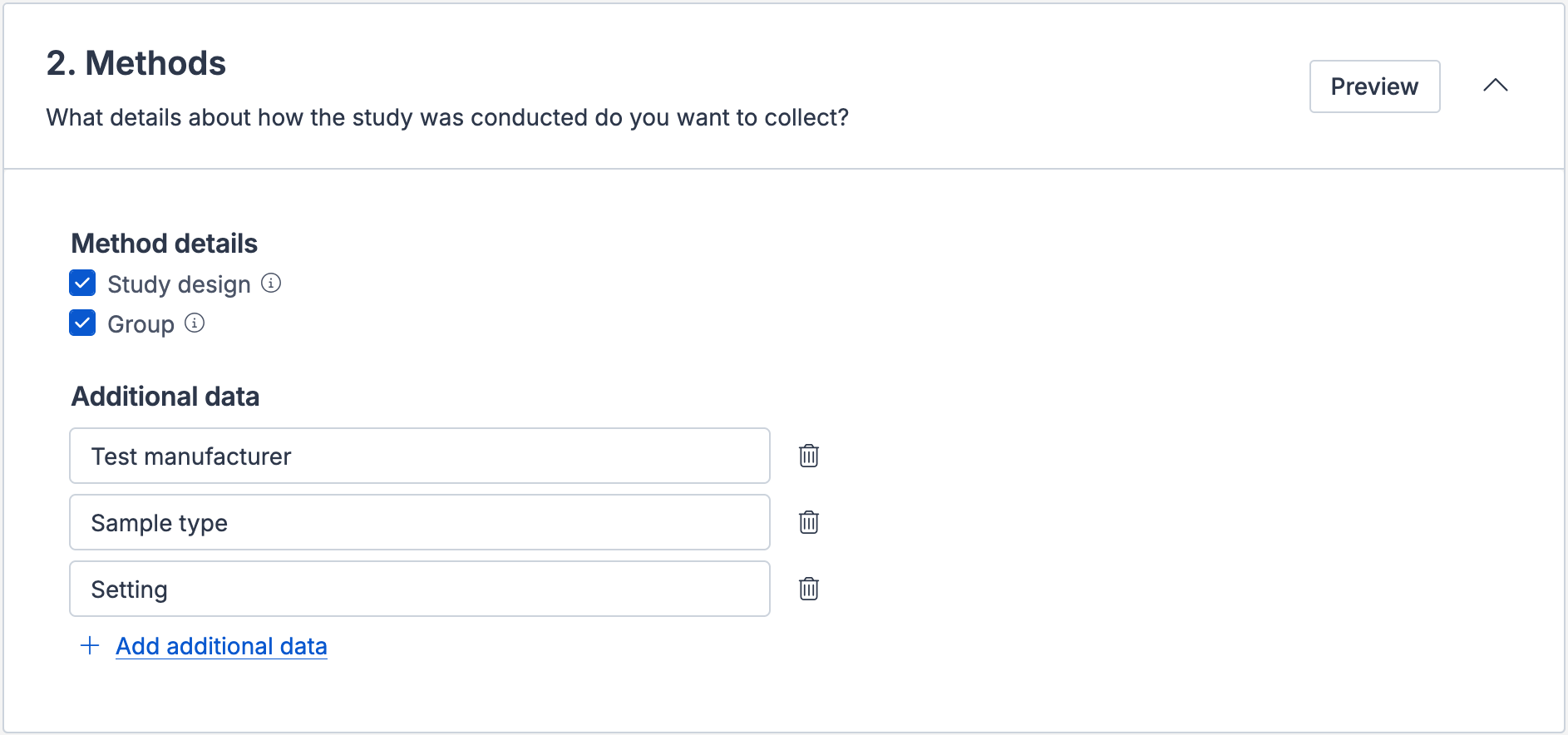
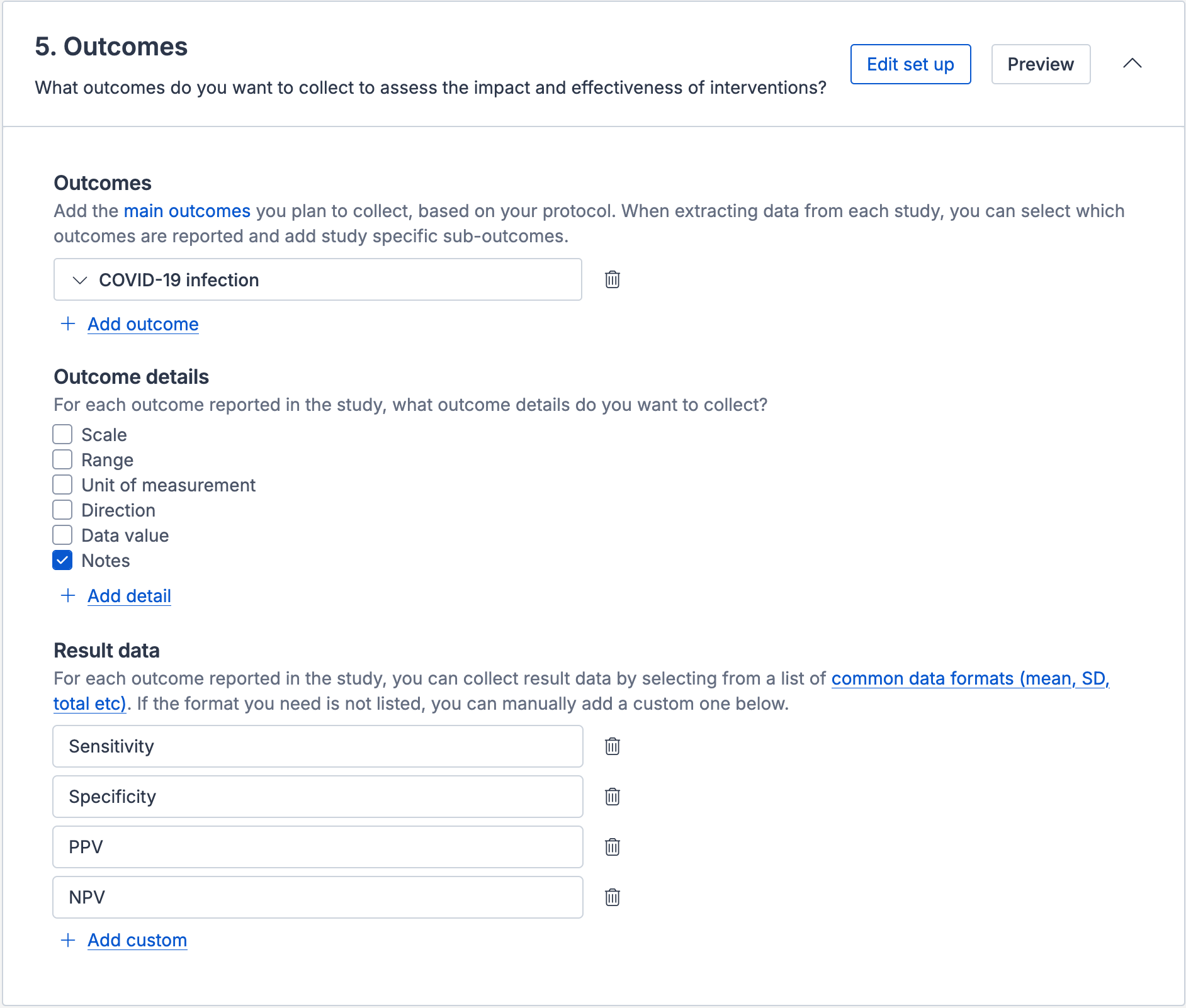
Research question: What is the accuracy of rapid antigen tests for detecting COVID-19?
Extraction 1 template | Example fields |
Methods | Test manufacturer |
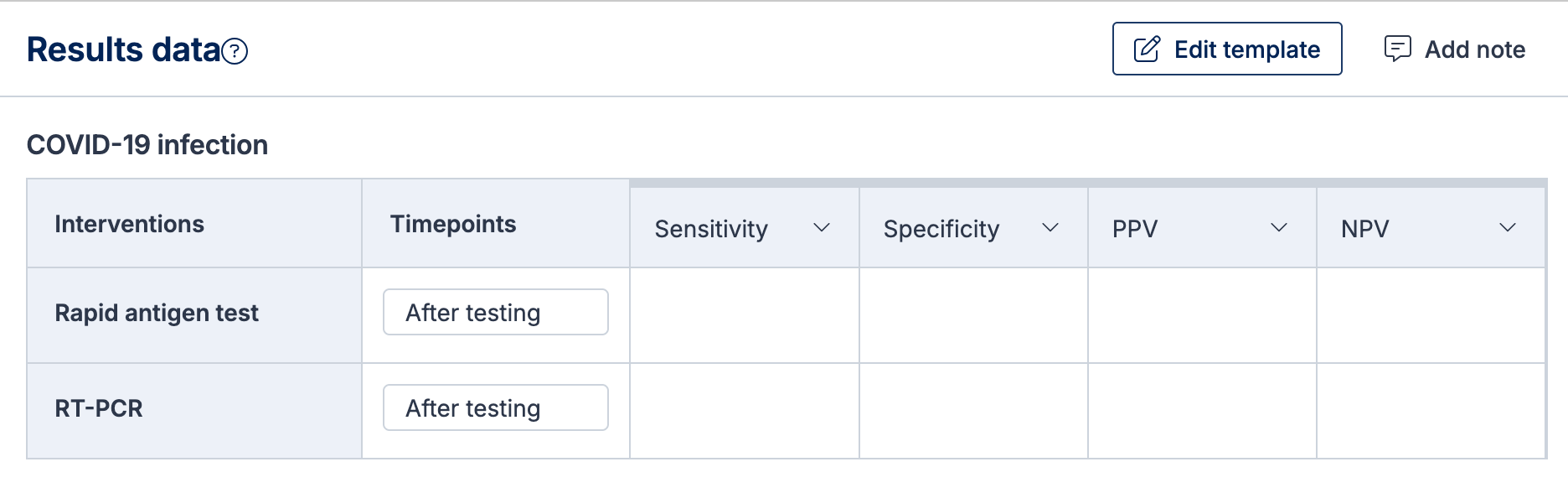
Interventions (as Index tests) | Rapid antigen test |
Intervention details (as Index test characteristics) | Brand |
Outcomes (as Target condition) | COVID-19 infection |
Result data | Sensitivity |
How it looks like in the template:
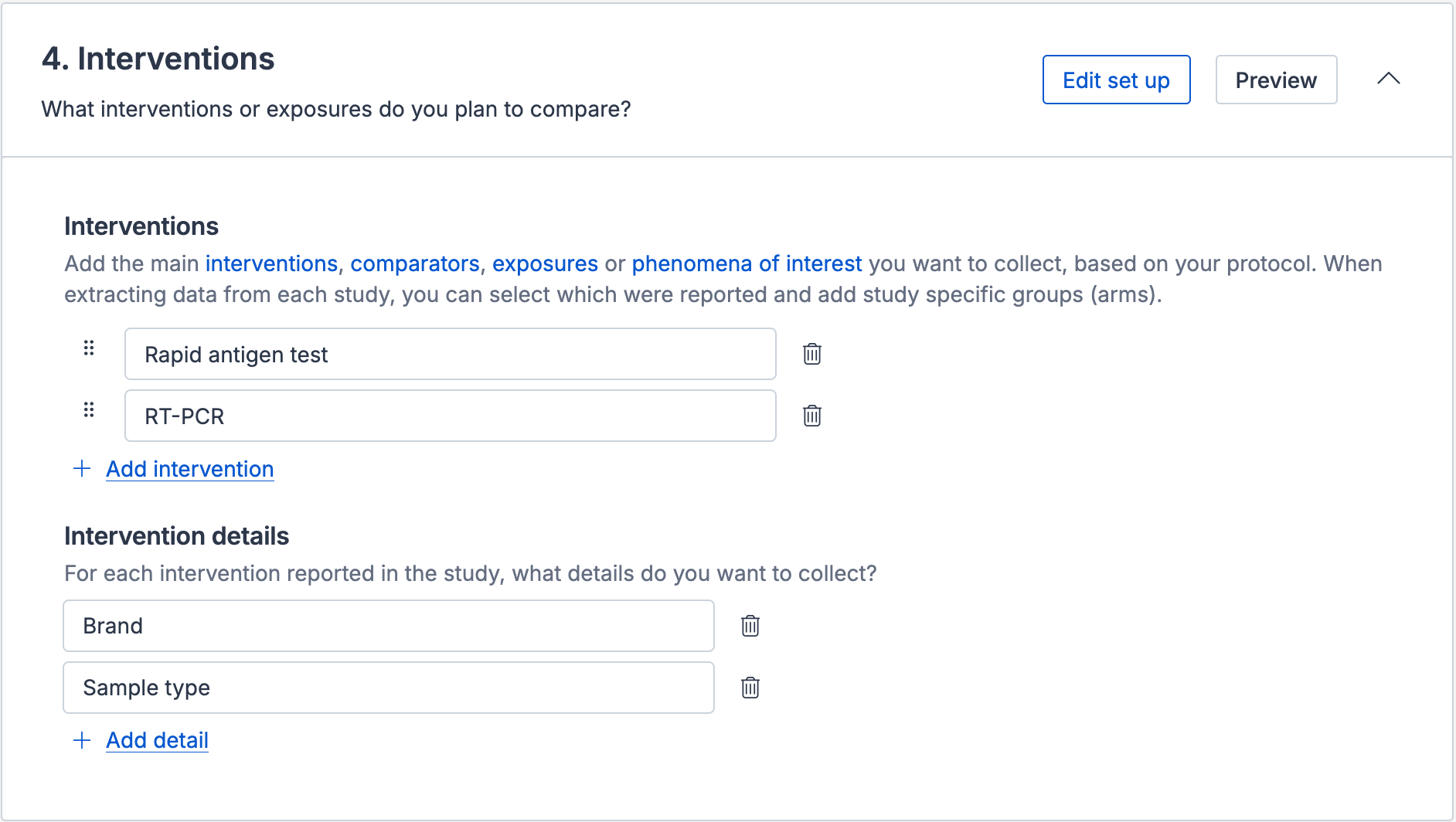
How data capture of index tests and target condition looks like in the data extraction form:
Example 5: Prognostic review
Research question: What factors predict recurrence in early-stage breast cancer patients?
Extraction 1 template | Example fields |
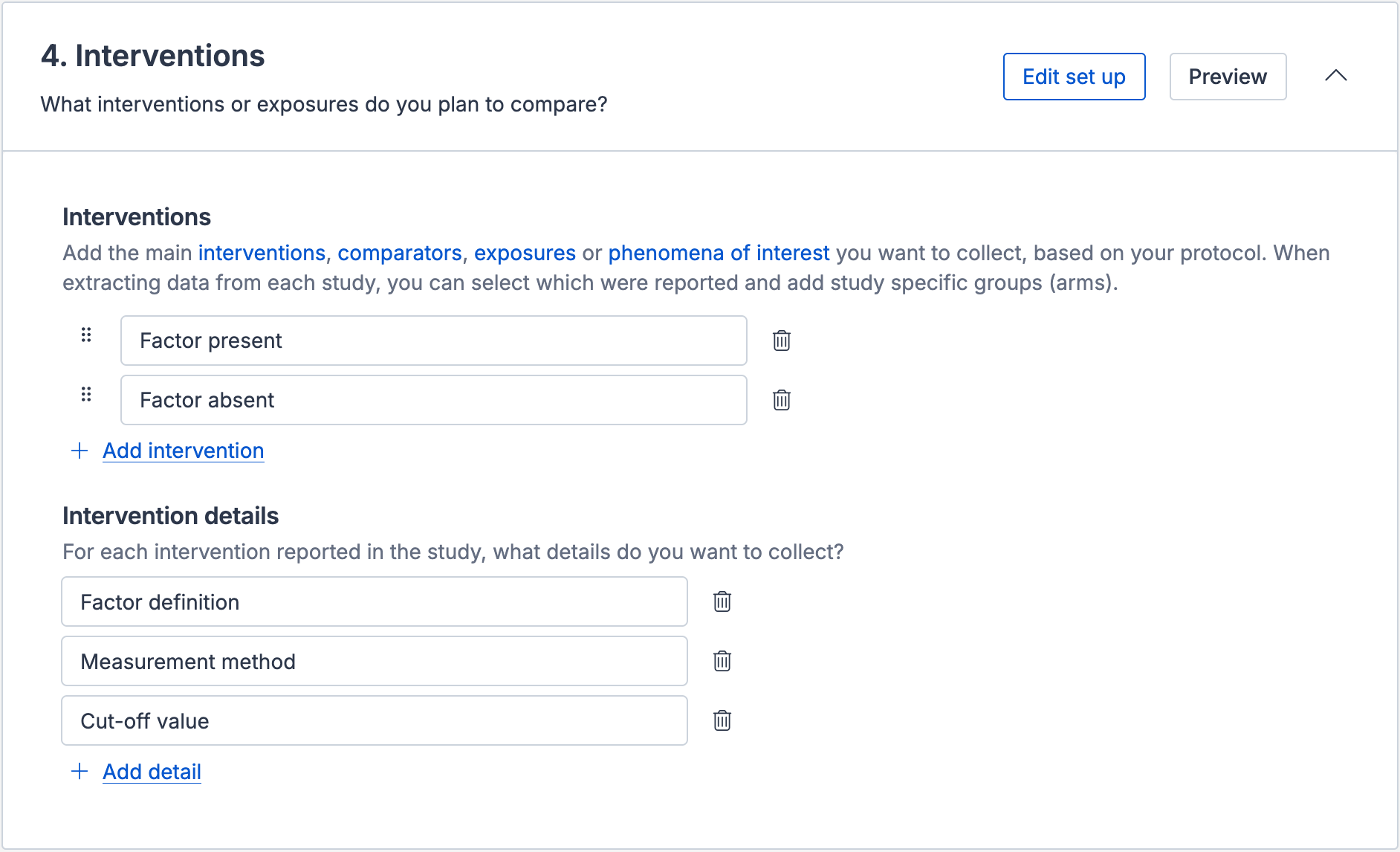
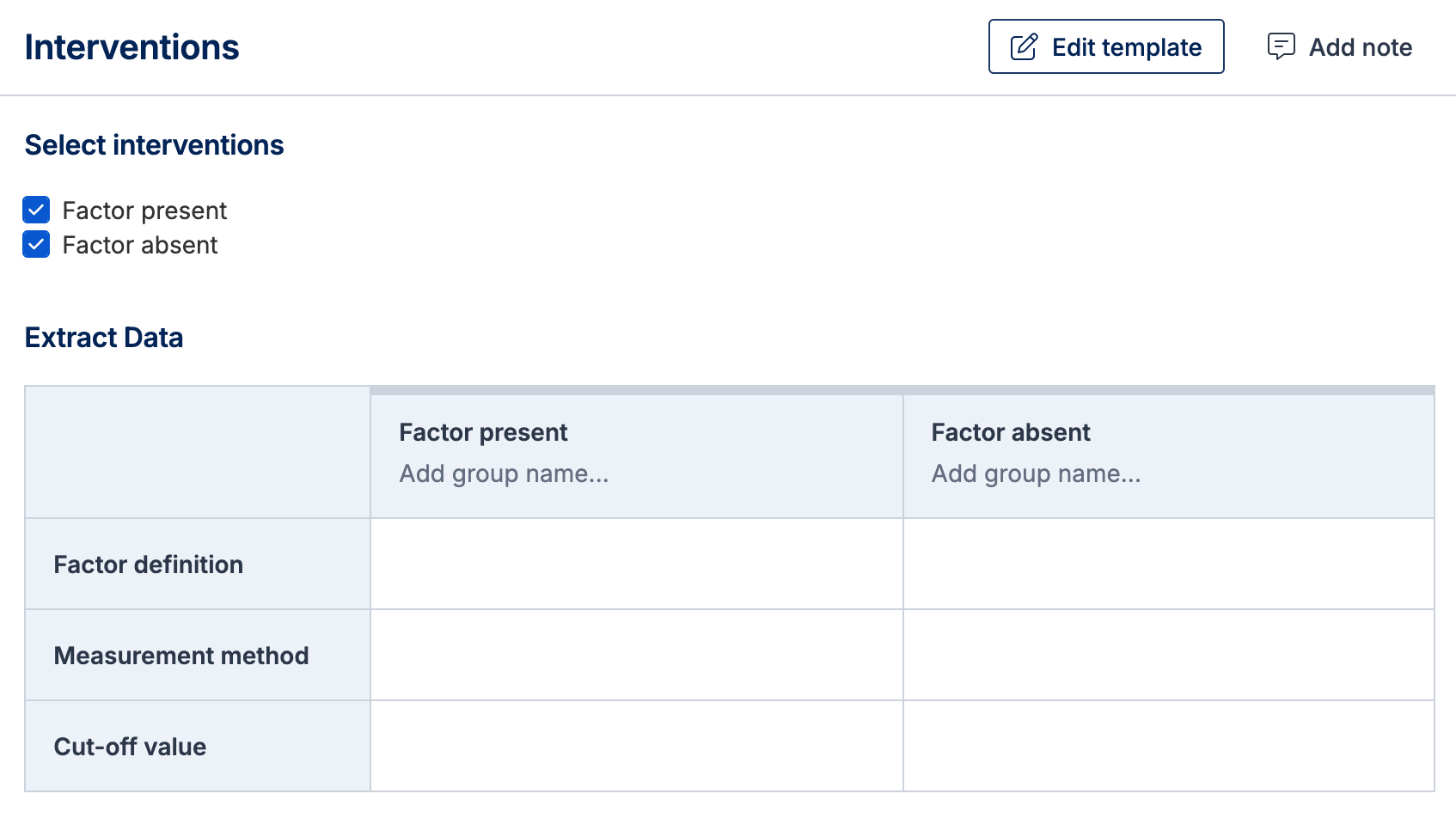
Interventions (as Prognostic factors) | Factor present |
Intervention details (as Prognostic factor details) | Factor definition |
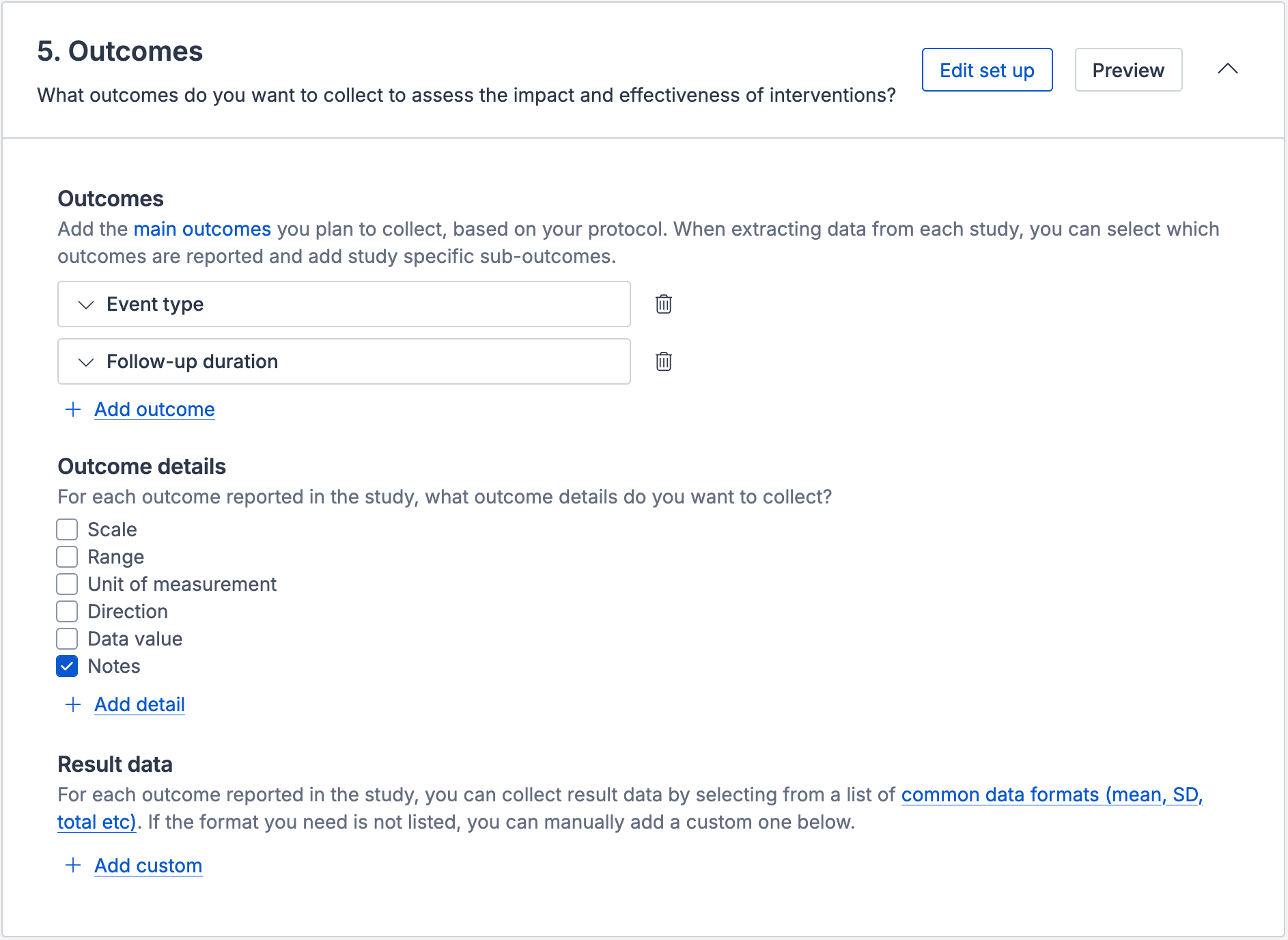
Outcomes | Event type (e.g. recurrence, mortality) |
How it looks like in the template:
How data capture of prognostic factors looks like in the data extraction form:
Recommendations
Extraction 1 works for any review where you're comparing groups and collecting structured data against them.
The key is understanding how to repurpose the fixed section names (especially "Interventions") to capture the data elements relevant to your specific research question.
If your review is purely descriptive or focused on mapping evidence without group comparisons, Extraction 2 may be a better fit.
Strongly recommend Extraction 1 for:
Intervention/therapy reviews
Treatment effectiveness
Any review planning meta-analysis
Extraction 1 is also highly suitable for:
Prevention reviews
Harm/etiology reviews
Mixed methods
Rapid reviews with quantitative synthesis
Case series
Qualitative reviews (with customization)
Diagnostic accuracy (with customization)
Consider Extraction 2 instead for:
Scoping reviews without synthesis
Network meta-analysis
Umbrella reviews
Reviews requiring completely custom structures outside the Extraction 1 framework