

Overview
The quality assessment template includes:
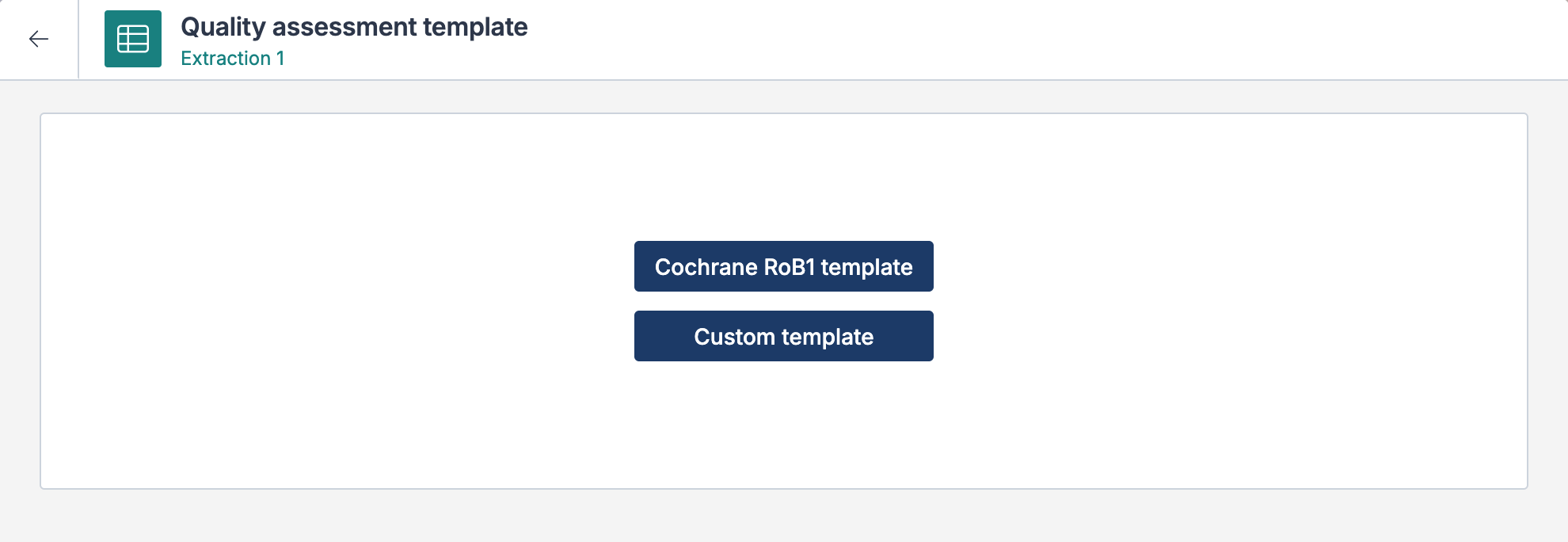
The option to select the Cochrane RoB1 template or custom template.
The ability to customize and add domains that can apply to multiple outcome groups.
The ability to copy a domain to speed up template setup when several domains share the same judgments
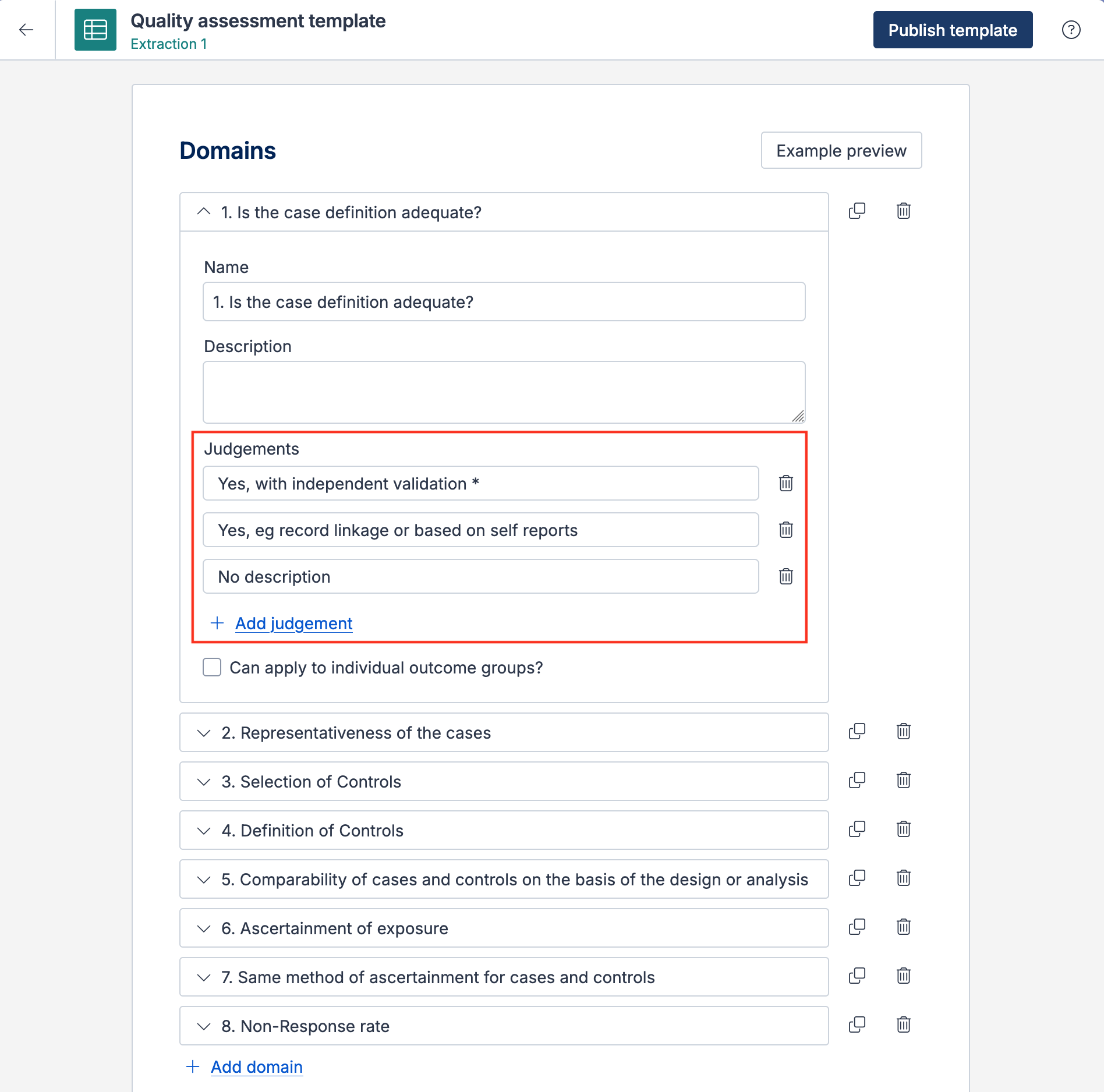
The ability to add and edit judgement labels - so that you can build tools such as Newcastle-Ottawa Scale, CASP checklist, MMAT and more in Extraction 1.
Updates made to the quality assessment template will be applied to all studies
Creating a quality assessment template
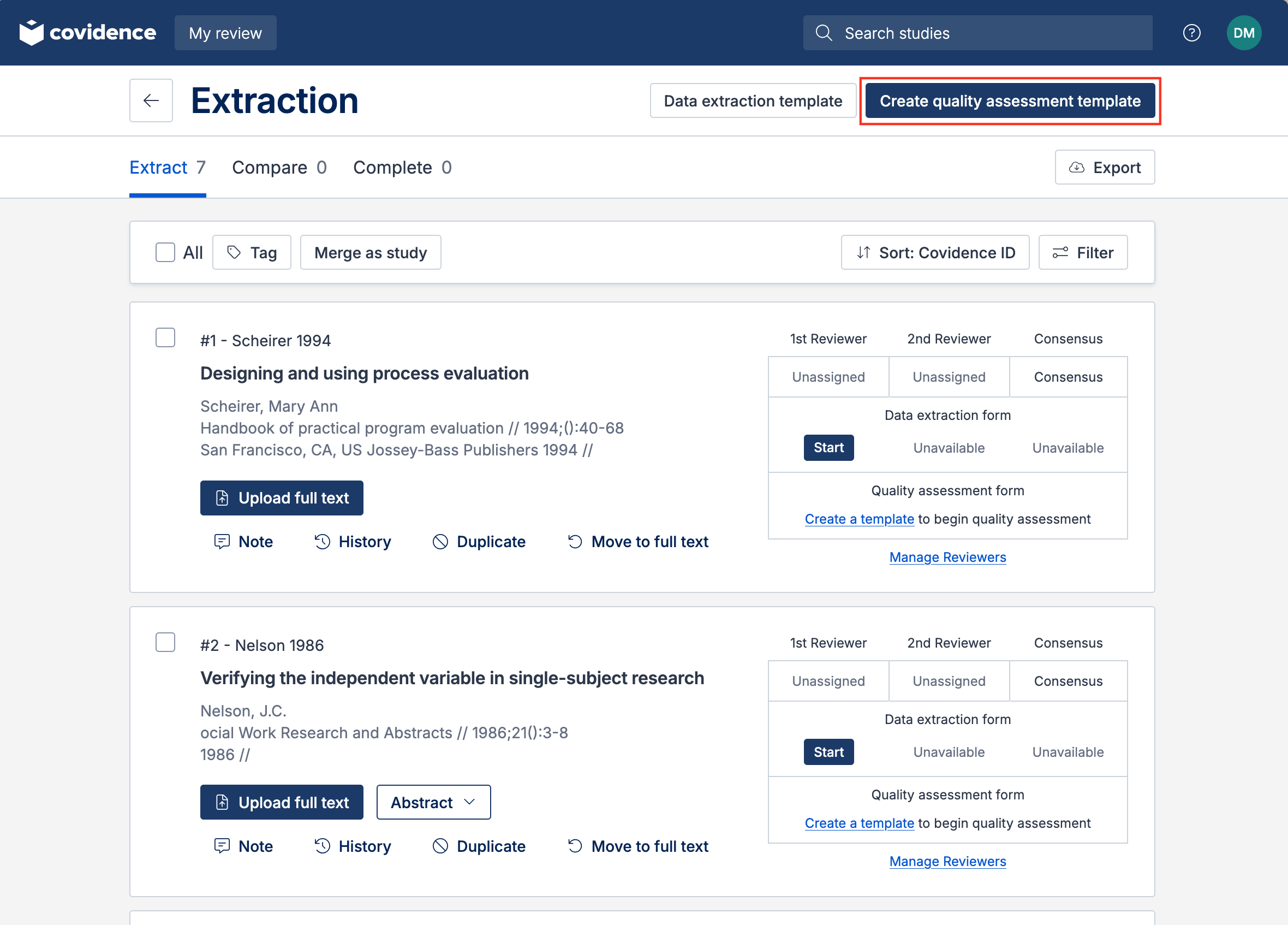
To use the quality assessment template, simply navigate to the Extraction tab on the Review Summary screen and click the Create quality assessment template button to get started.
You will have the option of using the Cochrane ROB1 template or you can create a custom template.
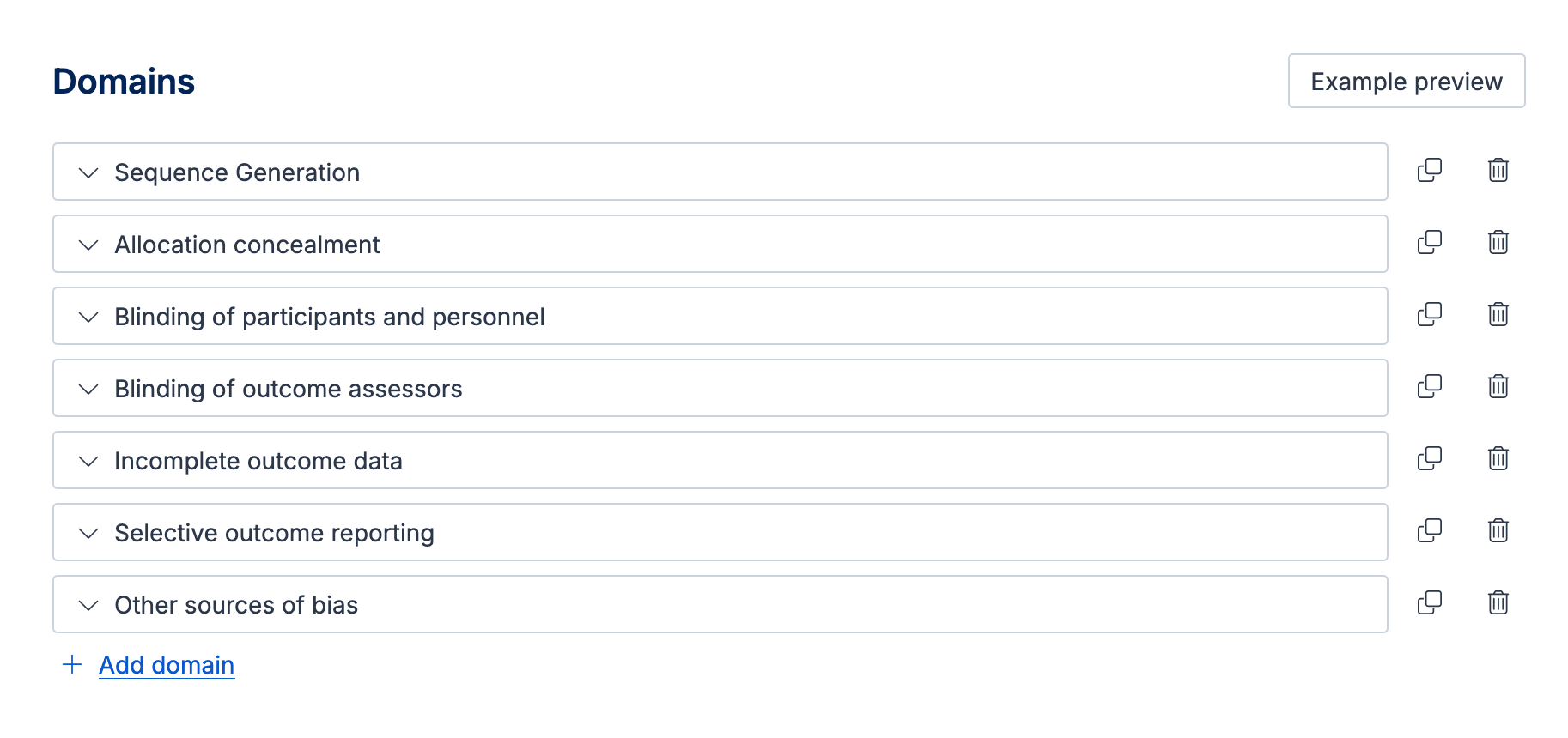
Choosing the Cochrane RoB template populates domains in line with Cochrane’s original Risk of Bias tool for randomized controlled trials, which can be edited as required.
Customizing judgements
On any domain, regardless of whether you started from the Cochrane RoB1 template or a custom template, you can add and edit the judgement options used when assessing that domain. This means you are no longer limited to the default Risk of Bias 1 options ("Low," "High," "Unclear") and can set up tools like the Newcastle-Ottawa Scale, CASP, or MMAT that use different judgement labels.
Note: RevMan exports still require the standard Risk of Bias 1 judgements ("Low / High / Unclear"). If you are planning to export to RevMan, keep the default judgements in place on your domains.
Defining outcome groups
On the quality assessment template, you can define outcome groups.
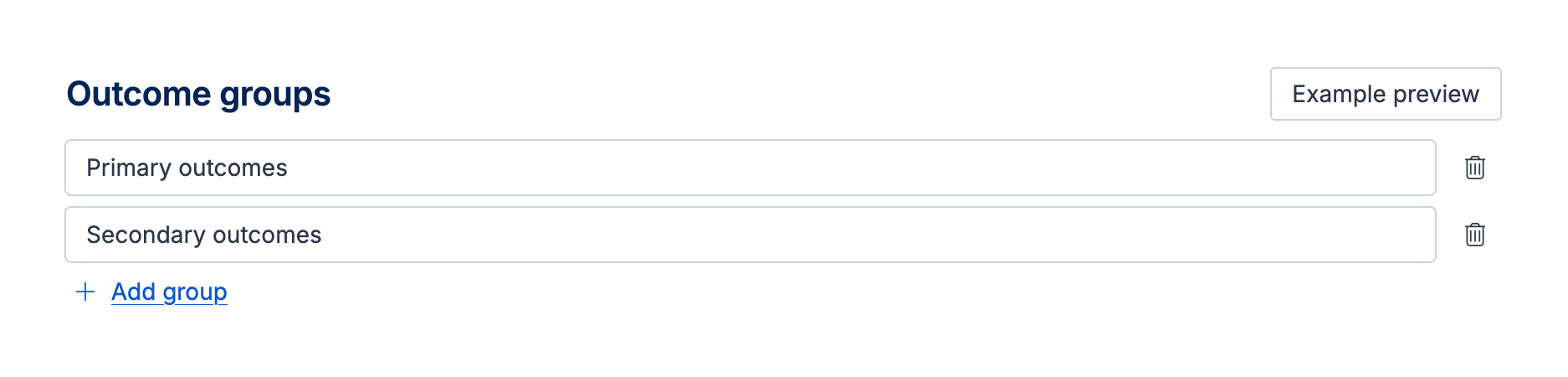
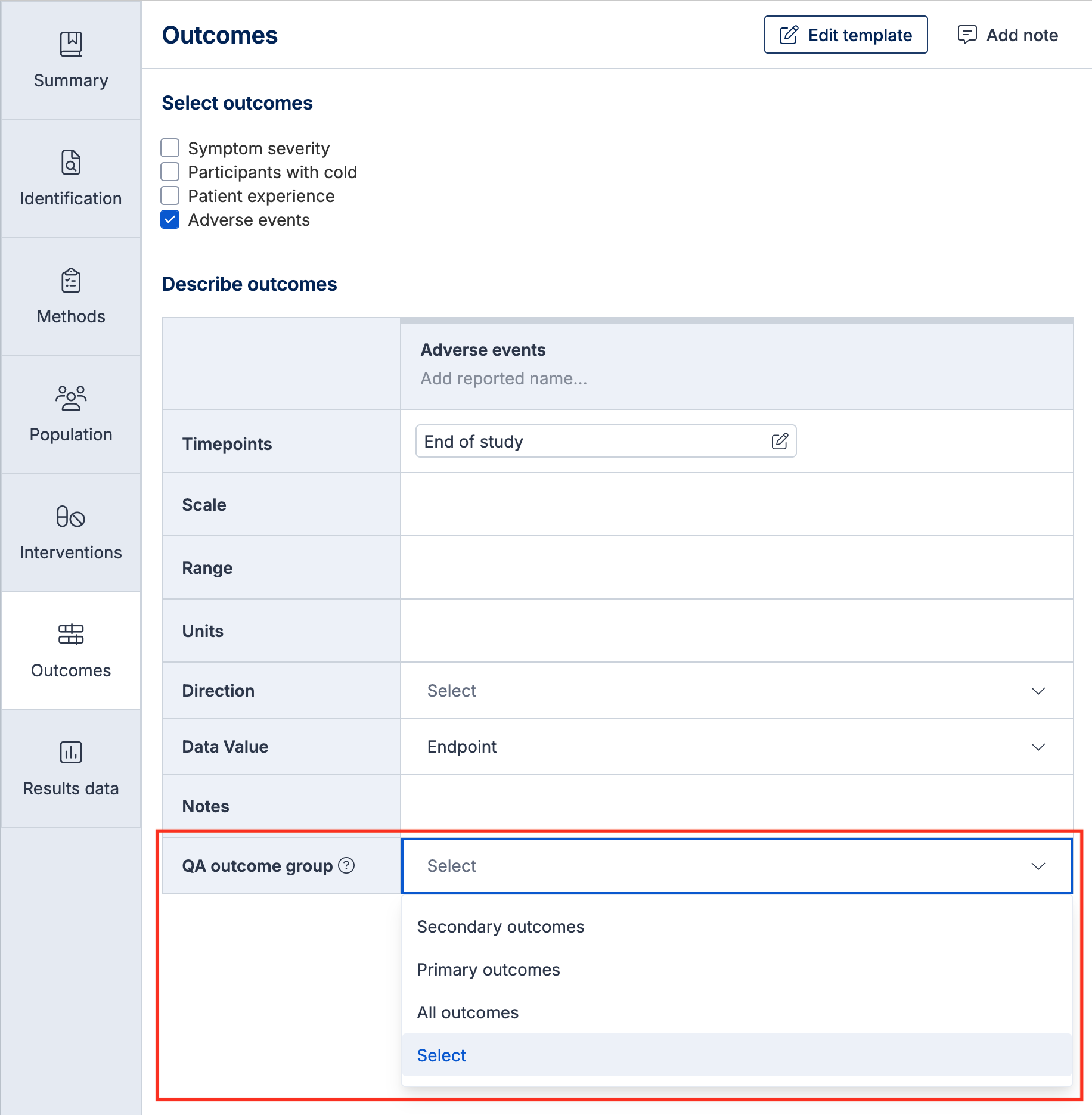
When extracting data for a study you can categorize outcomes that are reported into outcome groups and you can choose to assess the quality of each outcome group independently instead of for the study as a whole.
This might be useful if you’re expecting outcome groups to differ in their risks of bias for example subjective outcomes vs objective outcomes. Below is an example of categorizing an outcome for a study into an outcome group:
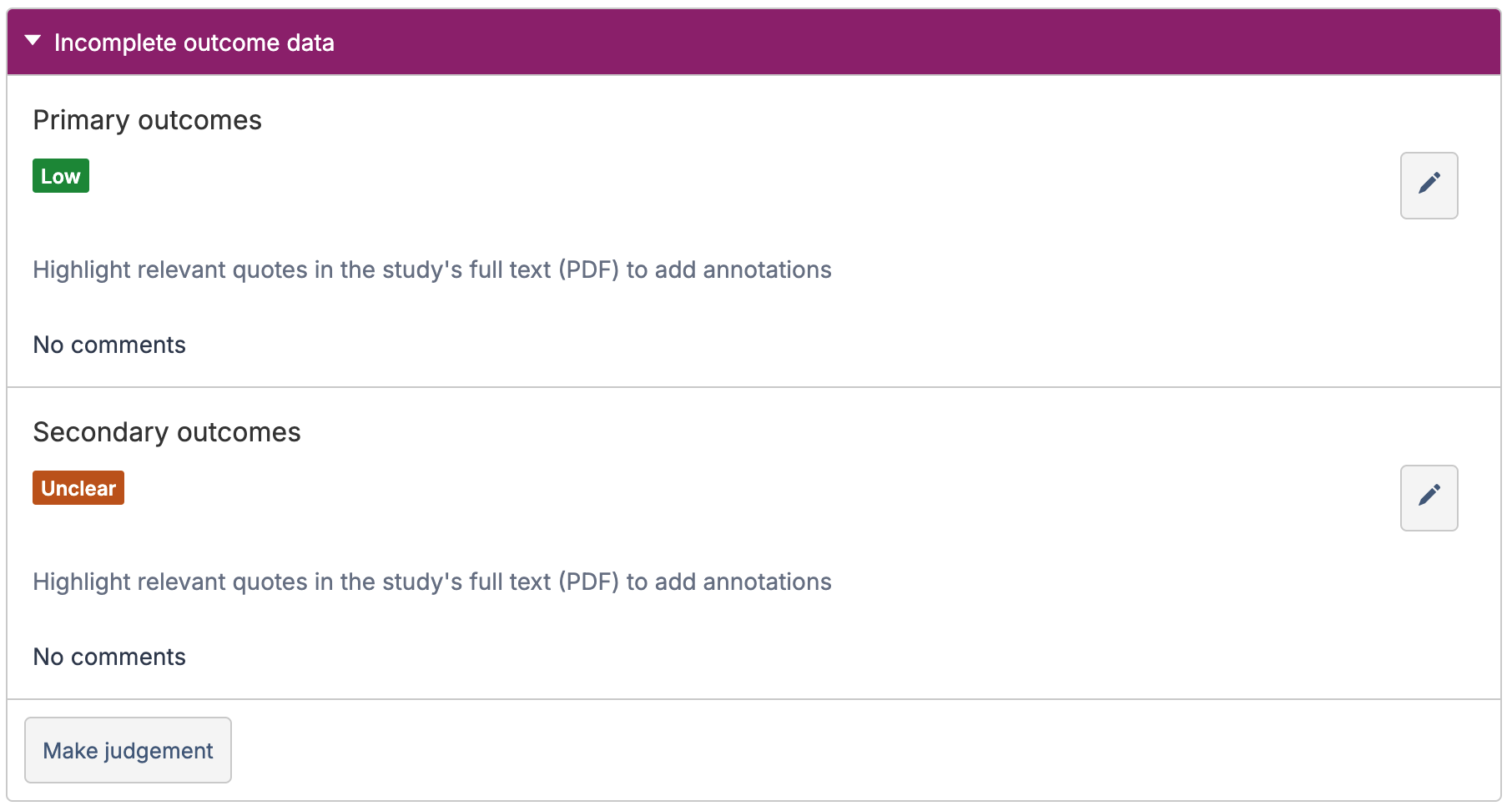
When assessing the quality of a study, this allows you to provide a judgement for each outcome group:
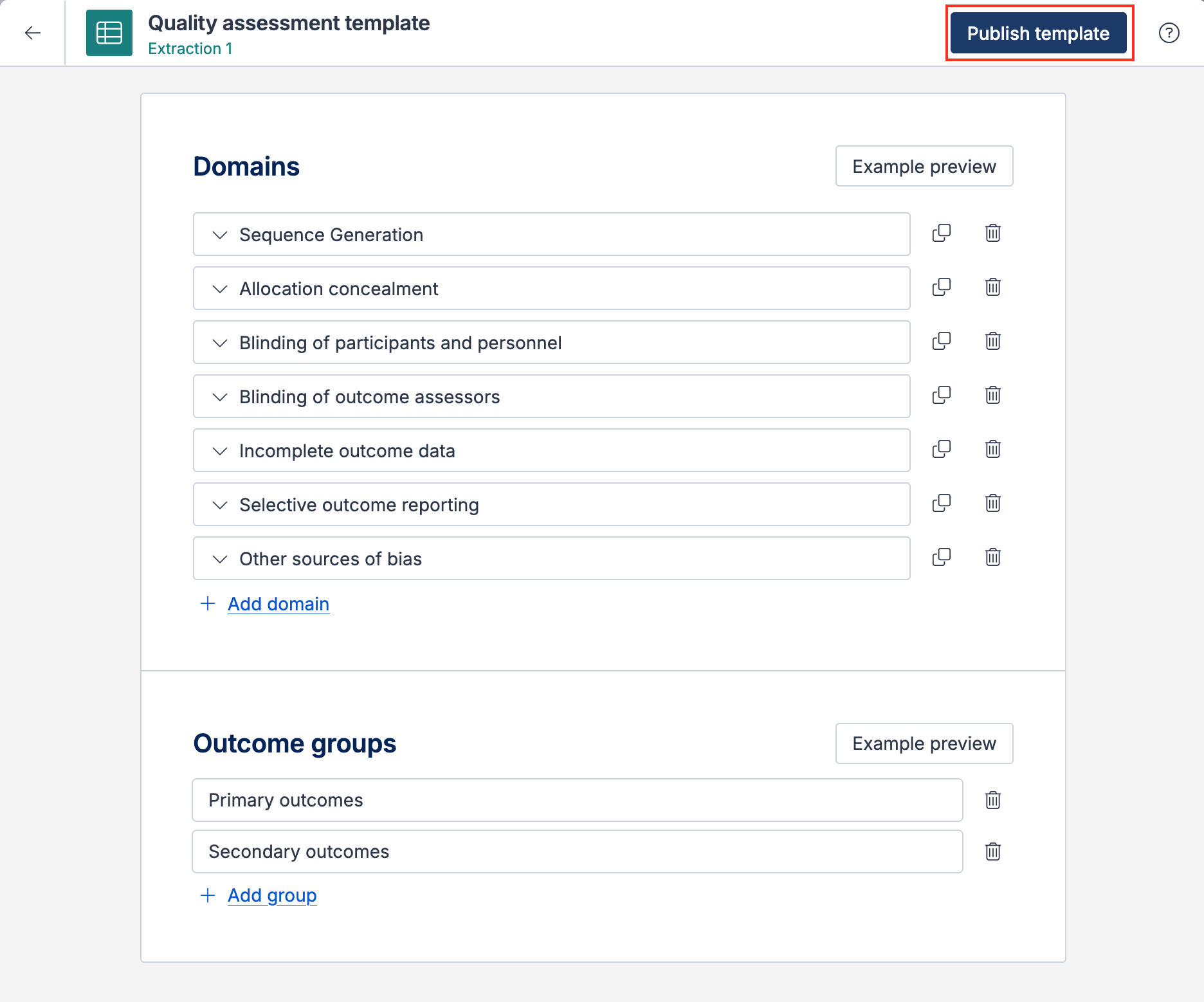
Once you are happy with the domains and outcome groups defined within the template, save the changes by clicking the Publish template button at the top of the screen. This will make the template available to all authors of the review.
Other useful links
On each section of the template, there are links to knowledge base articles providing tips on how to best set up your template. These articles are listed below: